





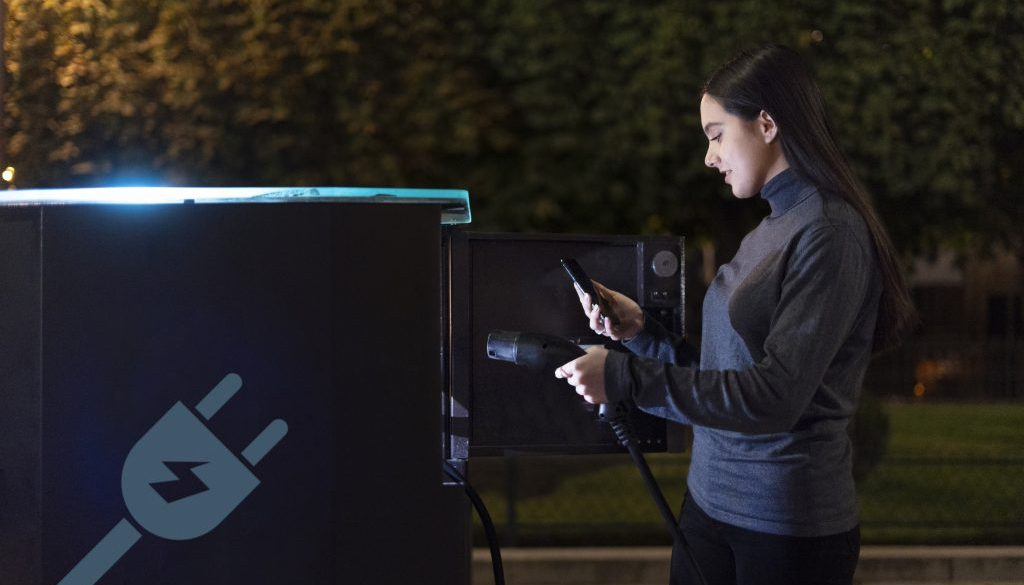
Electric mobility is transforming the urban and industrial landscape worldwide. With the increasing adoption of electric vehicles (EVs), charging infrastructure has become key to ensuring the efficiency and reliability of this energy transition.
In this context, the systems of UPS (Uninterruptible Power Supply)These devices, traditionally used to protect critical equipment against power outages, are gaining a strategic role as energy backup for electric vehicle chargers.
The rise of electric mobility
In recent years, electric vehicles have gone from being a distant trend to becoming a reality in several countries. Government incentives, technological advances in batteries, and greater environmental awareness have driven the demand for clean and sustainable transportation solutions.
However, for this revolution to be viable, it is necessary to ensure that charging points are always available and operating reliably. A power outage at a charging station can cause significant disruption, both for drivers and for companies that depend on the electrification of their fleets.
The role of UPS systems
UPS systems are designed to provide uninterrupted power in the event of power grid failures. They act as a bridge between the main power source and connected equipment, ensuring there are no interruptions during power outages, fluctuations, or blackouts.
When applied to electric mobility, UPS systems offer benefits such as:
- Operational continuityThey ensure that electric vehicle chargers remain active even in situations of grid instability.
- Protection against voltage spikesThey prevent damage to charging equipment and the vehicles themselves.
- Intelligent energy managementSome modern UPS models allow integration with monitoring systems, optimizing energy use and reducing costs.
UPS as a strategic support for chargers.
Imagine a fleet of electric buses operating in a large city. If the charging station experiences a power outage overnight, the vehicles may not be ready to operate the following day. The impact on urban mobility would be immediate.
With the presence of a UPS, this risk is mitigated. The system ensures that the chargers continue to function until the mains power is restored or auxiliary generators come online.
Furthermore, in locations where the power grid is unstable or overloaded, the UPS acts as a stabilizer, providing clean and constant power to the chargers. This increases the lifespan of the equipment and improves the user experience.
Sustainability and efficiency
Another important point is that UPS systems can be integrated with renewable energy solutions, such as solar panels and battery storage systems. This integration creates a sustainable ecosystem where cleanly generated energy is stored and used intelligently to power electric vehicle chargers.
This approach not only reduces dependence on the traditional electricity grid, but also contributes to reducing the carbon footprint of operations.
Applications in different sectors
The use of UPS in electric mobility is not limited to large urban centers. It can be applied in various scenarios:
- Companies with electric fleetsThey ensure that the vehicles are always ready for operation.
- Shopping centers and parking lotsThey ensure that customers have continuous access to charging points.
- Highways and service stationsThey prevent drivers from being left without support in strategic travel locations.
- Industries and logistics: They maintain the uninterrupted operation of electric vehicles for internal transportation.
Challenges and perspectives
Despite the benefits, implementing UPS in charging infrastructure still faces challenges. The initial cost can be high, especially in large-scale projects. Furthermore, it is necessary to plan the system capacity to meet the growing demand for electric vehicles.
However, technological advancements are making UPS systems more efficient, compact, and affordable. With the popularization of electric mobility, it is likely that the use of these systems will become standard in charging stations, just as it already is in data centers and hospitals.
Conclusion
Electric mobility represents the future of sustainable transportation, but its consolidation depends on a robust and reliable infrastructure. In this scenario, UPS systems emerge as strategic allies, guaranteeing uninterrupted power and protection for electric vehicle chargers.
More than just backup equipment, UPS systems become a fundamental part of a smart energy ecosystem, capable of integrating renewable sources, optimizing costs, and ensuring business continuity.
Investing in energy support solutions is investing in user confidence, business efficiency, and the sustainability of cities. After all, electric mobility is not just about vehicles, but about building a cleaner, safer, and more connected future.