





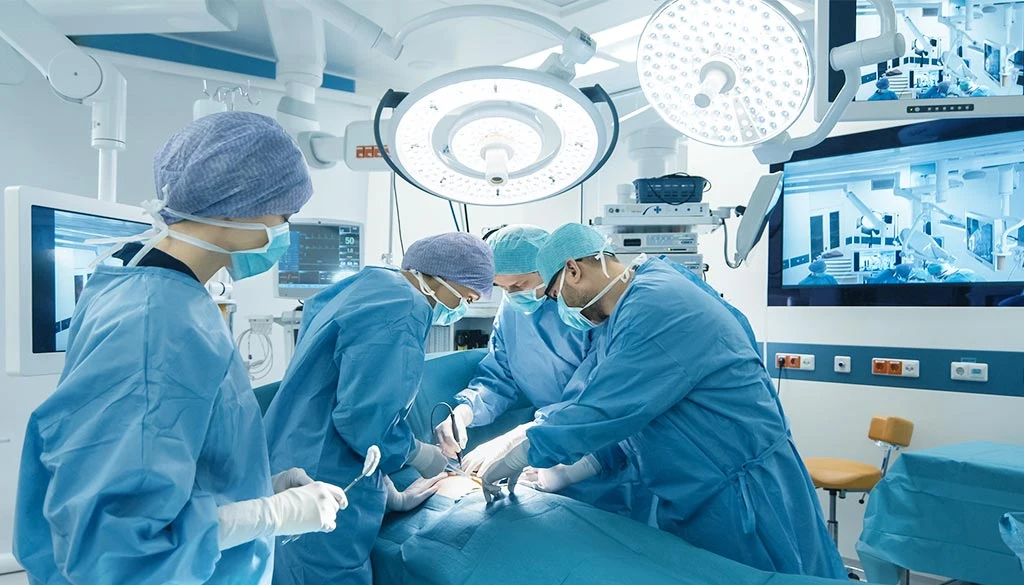
No business is more vulnerable than a hospital. After all, that’s where sick people are and where their treatments take place. Therefore, maintaining a good energy infrastructure is essential to prevent problems in the electrical grid, which can compromise operations. For this reason, it’s necessary to use good energy solutions, such as… hospital UPS.
In this post, see how essential energy is in a hospital. Also, learn about the advantages that an uninterruptible power supply (UPS) offers for this environment, as well as the best types to use.
Enjoy your reading!
Why is ensuring power in a hospital so important?
A power outage in a home can already cause damage and discomfort. However, in a hospital, this cannot happen under any circumstances. Below, check out some of the main reasons for its importance in the hospital setting.
Prevents damage to equipment.
Many pieces of equipment in hospitals are expensive. Furthermore, they are essential for treatments, surgeries, or even for keeping some patients alive. Therefore, it is crucial that they function continuously to avoid interruptions in operations, which can cause serious problems.
One example is the blackout that occurred in the state of Amapá in 2020. At the time, it lasted about 20 days and caused many problems. problems for hospitalsincluding compromising the safety of people in ICUs or undergoing surgery.
It does not delay appointments.
When a power outage occurs in a hospital, even a brief one, even simple equipment like computers can be damaged. This is because data can be lost in the process, and the staff member may have to restart their entire system.
This leads to delays in service, resulting in dissatisfaction among patients and staff. Therefore, when there is a guaranteed power supply, it is possible to avoid this type of situation and, consequently, reduce waiting times.
Preserves patient data.
One potentially unnoticed but serious problem is the loss of patient data, especially sensitive information about their health. This hinders the continuation of treatment, even more so if doctors need to make quick decisions.
Therefore, systems must have the security of uninterrupted power so that, when data is entered, it can be saved correctly and is always accessible when needed.
What are the advantages of having a hospital-grade uninterruptible power supply (UPS)?
To ensure a constant power supply, devices like hospital-grade uninterruptible power supplies (UPS) are the best solution. Below, check out their advantages!
It guarantees safety.
With a hospital-grade uninterruptible power supply (UPS), all critical equipment, such as ventilators and vital sign monitors, remains safe. This is because the UPS provides the necessary power for them to continue operating.
Hospital UPS systems have a monitoring system, which allows for the identification of potential failures and the implementation of predictive and preventive actions with greater safety. In situations of commercial power grid failure, the hospital UPS uses the energy stored in its batteries to keep the various sectors and equipment of the hospital fully operational, without any interruption.
Another aspect is that the UPS can also support systems and equipment that are complementary to the proper functioning of the hospital, for example:
- fire protection systems;
- security cameras;
- laboratories.
Prevents problems
When a hospital fails to provide the necessary care for patients, it is subject to various problems, including legal action.
Therefore, a good infrastructure is necessary for the hospital to operate. This includes not only the use of UPS systems, but also a good electrical grid and the constant maintenance of equipment and facilities.
In this way, all the necessary equipment can be in place to maintain the energy supply, in order to support and carry out the hospital’s operations with quality.
Promotes reliability.
A well-prepared hospital, with uninterruptible power supplies (UPS) ready to provide power, also achieves a greater reliability.
This happens because doctors and nurses can be confident in using good equipment, supplied with the necessary power to function. Thus, the facility becomes recognized for its good infrastructure, generating peace of mind for patients and their families.
It improves the quality of service.
With power grid fluctuations, service is compromised. Therefore, when the hospital’s uninterruptible power supply (UPS) is available and operational, it sustains the service systems.
Therefore, in addition to information being protected, service is maintained even in aggravating conditions. This allows employees to continue their work focused and provide prompt service, which will be valued by patients.
It contributes to the economy.
Hospital management needs to ensure resources are available for the treatments offered. However, this is hampered when there are high expenses related to equipment, including equipment damaged by electrical overload.
In this way, the hospital UPS also helps to support each piece of equipment, from basic to critical, increasing its lifespan. This prevents damage and eliminates the need to frequently invest in new options.
In addition, depending on the model, the UPS may include… monitoring systems Intelligent systems that identify if a piece of equipment is experiencing fluctuations. Therefore, it’s easy to check if any equipment is malfunctioning and arrange for its maintenance.
Which hospital UPS models should I choose?
There are different types of uninterruptible power supplies (UPS). Therefore, it’s worthwhile to learn about them in order to know which one is best for the hospital.
Uninterruptible power supplies (UPS) with semi-sinusoidal output, often sold for home use, are not recommended for hospital applications. It is important that the UPS provides pure, uninterrupted sine wave power, something that can be found in sinusoidal interactive equipment.
Finally, the online option of double conversion It is the most suitable type of UPS for critical hospital equipment. This is because they are more robust and reliable, being connected to the battery constantly. In other words, it is capable of providing uninterrupted power and stabilizing a fluctuating network.
In a hospital, power fluctuations can cause serious damage. This is because there are several essential systems and equipment, including those that provide life support.
Given the above, it is necessary to take all measures to guarantee an uninterrupted supply, using energy solutions such as… hospital UPS. With different models available, it ensures a constant supply, protects hospital operations, and contributes to patient safety.
Did you enjoy learning about the UPS solutions? Get to know Engetron’s Double Way models better!