





An uninterruptible power supply (UPS) is one of the most important pieces of equipment for ensuring the safety and continuity of operations in corporate and residential environments. It acts as a barrier against power fluctuations, sudden drops, and voltage spikes that can compromise the operation of computers, servers, security systems, and even medical equipment.
However, for the UPS to function efficiently, it is essential that users take certain precautions when connecting their devices. Improper use can not only reduce the lifespan of the UPS but also put connected devices at risk. In this article, we will detail the main precautions you should take when connecting your equipment to the UPS.
- Assess the required power.
Before connecting any equipment, it is essential to check the UPS load capacity. Each model has a maximum power rating, usually indicated in VA (Volt-Ampere) or Watts.
- Make a list of the power consumption of the devices you intend to connect.
- Add the values together and compare them to the UPS capacity.
- Avoid exceeding this limit, as overloading can cause malfunctions, unexpected shutdowns, and even internal damage to the equipment.
A common mistake is connecting too many devices without considering the total power consumption. Remember: the UPS (Uninterruptible Power Supply) should be sized according to your actual needs.
- Prioritize essential equipment.
An uninterruptible power supply (UPS) should not be used as an extra power outlet for any appliance. It is designed to protect… critical equipmentIn other words, those who cannot suffer power outages.
- Computers, servers, telephone systems, security cameras, and medical equipment are examples of devices that need to be connected.
- Avoid plugging in high-consumption appliances such as laser printers, microwaves, or heaters. These devices can drastically reduce battery life and compromise the UPS’s operation.
By prioritizing essential equipment, you ensure that, in the event of a power outage, the most important devices will continue to function.
- Use secure connections.
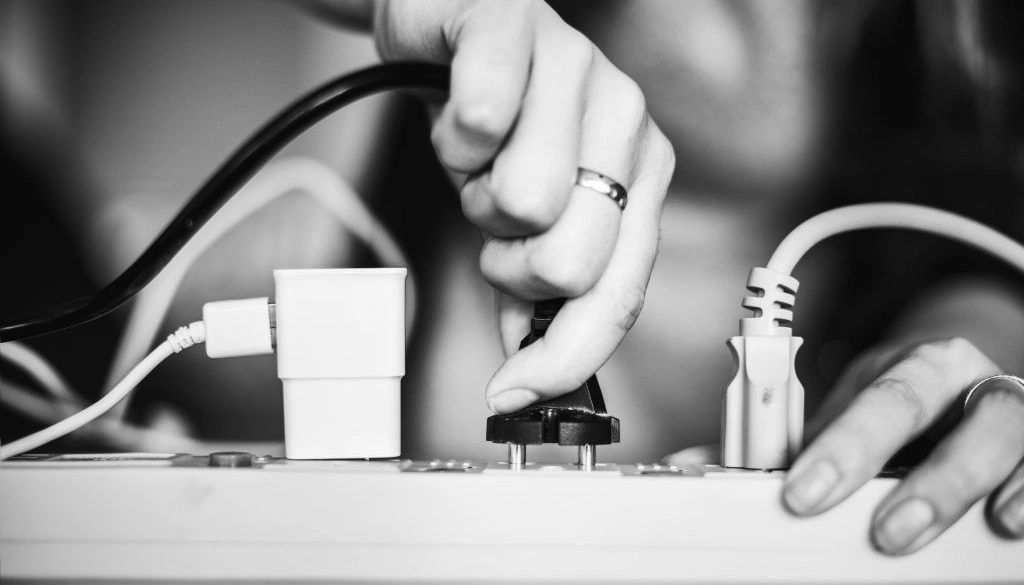
Another important precaution is to ensure that connections are made in a secure and organized manner.
- Use cables in good condition and avoid extension cords or multiple adapters (“multiple adapters”), which can cause poor connections.
- Keep the wiring organized to reduce the risk of accidents and make maintenance easier.
- Make sure the plugs are secure and properly fitted.
A faulty connection can compromise the protection offered by the UPS and even cause short circuits.
- Pay attention to the installation environment.
The location where the UPS is installed also directly influences its performance.
- Keep the equipment in a well-ventilated area, away from heat and moisture sources.
- Avoid placing it in enclosed or poorly ventilated areas, as overheating can reduce battery life.
- Protect the UPS from dust, which can accumulate on the internal components and impair its operation.
A suitable environment ensures that the UPS operates under ideal conditions and extends its lifespan.
- Perform regular tests and maintenance.
Like any electronic equipment, an uninterruptible power supply (UPS) needs… preventive maintenance.
- Perform regular tests to verify that it is functioning correctly.
- Simulate power outages to assess battery life.
- Replace the battery as recommended by the manufacturer, usually every two or three years.
Regular maintenance prevents unpleasant surprises and ensures that the UPS is ready to operate when needed.
- Discover the additional features.
Many UPS models offer extra features that can make them easier to use and increase protection.
- Some have monitoring software that allows them to track performance in real time.
- Others offer audible alarms to indicate battery overload or failure.
- Some models allow you to configure the automatic shutdown of equipment in case of a prolonged power outage.
Knowing and using these features can make using a UPS even more efficient.
- Avoid improvising.
Finally, it is important to emphasize that the UPS (Uninterruptible Power Supply) should not be used in an improvised manner.
- Never attempt to modify the equipment or perform repairs without technical knowledge.
- Avoid connecting devices that are not designed to work with a UPS (Uninterruptible Power Supply).
- Always follow the manufacturer’s recommendations and, if in doubt, consult a qualified professional.
Improvisations can compromise the safety of equipment and even cause accidents.
Conclusion
An uninterruptible power supply (UPS) is an investment in safety and continuity. It protects your equipment against unexpected electrical problems and ensures that your operations are not interrupted by power outages. However, for this protection to be effective, it is essential to take basic precautions when connecting devices.
Assessing the necessary power, prioritizing essential equipment, maintaining secure connections, installing in a suitable environment, and performing regular maintenance are practices that make all the difference. Furthermore, knowing the additional features and avoiding makeshift solutions ensures that the UPS operates efficiently and for a long time.
If you are looking for customized energy solutions for your company, the Engetron We offer uninterruptible power supplies (UPS) with configurations tailored to each need. Visit our website. www.engetron.com.br and discover how to protect your equipment with maximum efficiency.