




In hospital settings, reliable electrical power is a determining factor for patient safety and the continuity of medical services. Diagnostic imaging equipment, such as CT scanners and MRI machines, depend on a stable and uninterrupted power supply to function correctly.
An electrical failure, even a momentary one, can compromise examinations, damage sensitive components, and even put lives at risk. In this context, the use of uninterruptible power supplies (UPS) Specifically designed for critical loads, this becomes an indispensable solution.
The importance of uninterrupted power for health.
Hospitals and clinics are environments where the margin for error is minimal. Advanced imaging exams require absolute precision, and any interruption can result in data loss, the need to repeat the procedure, and delays in diagnosis. Furthermore, patients undergoing MRI or CT scans are often in delicate conditions, and an electrical failure can create stressful situations or clinical risks.
An uninterruptible power supply (UPS) acts as a shield against power fluctuations, outages, and interruptions. It ensures that equipment remains operational until power is restored or emergency generators kick in.
Characteristics of critical loads
We call it critical loads Equipment whose operation cannot be interrupted without causing significant damage. In the healthcare sector, CT scanners and MRI machines perfectly fit this definition.
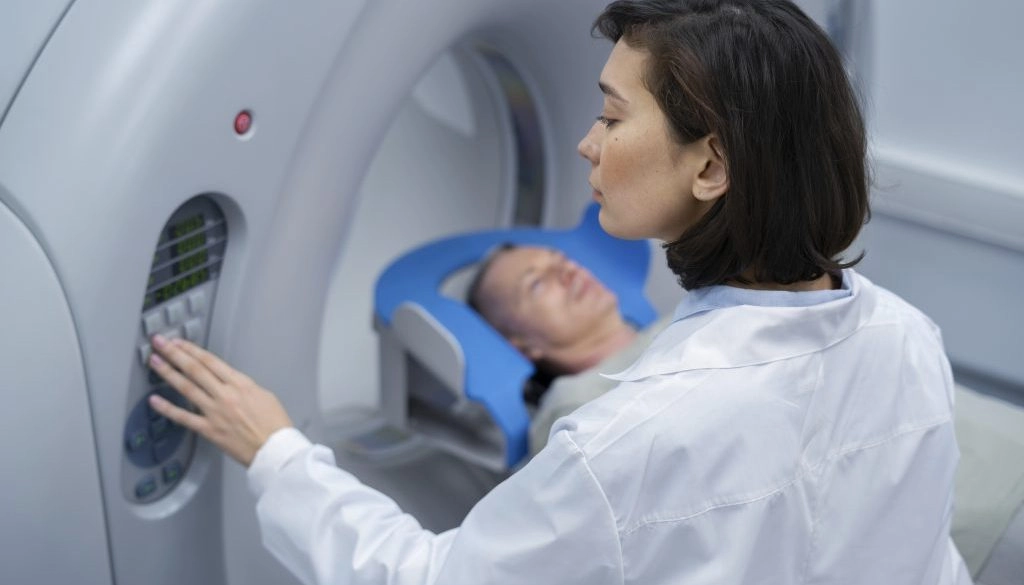
- Computed tomography (CT) scanners: They use radiation to generate detailed images of the human body. An interruption during the examination can compromise image quality and require the patient to be exposed to radiation again.
- Magnetic resonance imaging (MRI): It relies on intense magnetic fields and continuous cooling systems. An electrical failure can destabilize the magnetic field, affect the integrity of the equipment, and jeopardize patient safety.
These systems have highly sensitive electronic components that cannot tolerate sudden voltage variations. Therefore, the UPS (Uninterruptible Power Supply) not only provides continuous power but also acts as a regulator, filtering noise and stabilizing the electrical current.
Benefits of using uninterruptible power supplies (UPS) in hospital environments.
Adopting uninterruptible power supplies (UPS) for critical loads brings a number of advantages that go beyond simply ensuring a continuous power supply:
- Equipment protection: It prevents damage to electronic boards, cooling systems, and high-precision components.
- Patient safety: It ensures that examinations are not interrupted, avoiding physical and psychological risks.
- Operational efficiency: It reduces the need to repeat tests, saving time and resources.
- Integration with generators: It keeps the equipment running until the emergency power systems take over.
- Regulatory compliance: Many health organizations require electrical protection systems to ensure minimum safety standards.
Types of UPS (Uninterruptible Power Supply) suitable for critical loads.
Not all uninterruptible power supplies (UPS) are created equal. For hospital applications, it is essential to choose models designed for critical loads, with specific characteristics:
- Online double-conversion UPS: It provides clean and constant energy, completely isolating equipment from variations in the electrical grid.
- High autonomy: The ability to keep the equipment running long enough for the generator to be activated.
- Scalability: possibility of expansion as hospital demand grows.
- Remote monitoring: It allows you to monitor performance and anticipate failures.
- Redundancy: Systems that ensure continuous operation even in the event of a module failure.
Economic and strategic impact
Although acquiring hospital uninterruptible power supplies (UPS) represents a significant investment, the benefits far outweigh the costs. The interruption of an examination can lead to financial losses, damage to the institution’s image, and even lawsuits in cases of harm to the patient.
Furthermore, hospitals that invest in robust electrical infrastructure demonstrate a commitment to quality and safety, which strengthens their reputation and attracts more patients. In an increasingly competitive market, the reliability of services is a strategic differentiator.
Practical examples
Imagine a hospital that performs dozens of CT scans a day. A power outage of just a few seconds can interrupt all ongoing exams, forcing them to be repeated and increasing the waiting list. With an uninterruptible power supply (UPS), the equipment continues to function normally, and patients don’t even notice the power failure.
In the case of magnetic resonance imaging (MRI), protection is even more critical. The magnetic field needs to be kept stable, and any interruption can compromise the cryogenic system, responsible for maintaining the magnet at extremely low temperatures. Such an incident can result in millions of dollars in costs for repairing or replacing the equipment.
Conclusion
The use of uninterruptible power supplies (UPS) for critical loads in hospitals is not just a matter of convenience, but rather a matter of… safety, efficiency and responsibility. Computed tomography (CT) scanners and magnetic resonance imaging (MRI) machines are indispensable tools for accurate diagnoses, and their continuous operation depends on reliable electrical power.
Investing in high-performance uninterruptible power supplies (UPS) means protecting patients, preserving equipment, and ensuring the excellence of medical services. In an environment where every second counts and every exam can save lives, uninterrupted power is more than a technical resource: it’s a commitment to health and to life.