





Protecting hospital equipment is a crucial factor in healthcare. Therefore, ensuring an adequate and uninterrupted supply of electricity is fundamental to the well-being of patients.
In hospital settings, it is essential. to ensure operational continuity. To achieve this, it is necessary to rely on resources that ensure the performance and integrity of sensitive equipment. Therefore, maintaining electrical continuity is important to preserve critical life-support applications.
However, what can happen if there is a power outage in healthcare facilities? In this article, learn more about the importance of protecting hospital equipment from power failures.
What are the risks of power outages in hospital equipment?
Power outages in the healthcare sector are a problem that causes serious impacts. After all, it implies the interruption of crucial routine activities in hospital environments or the delay of procedures.
As a result, both the well-being of patients and healthcare professionals can be impacted. The same applies to acquired resources and supplies, which can be lost in situations of power outages.
Having a reliable power supply becomes an indispensable precaution in hospital environments to prevent a range of consequences.
Adopt strategic contingency plans to provide uninterrupted power supply to ventilation, lighting, conservation, information and transport systems This becomes even more important when you understand the main problems caused by power outages.
Next, learn what can happen in hospital settings when there is a power outage.
Loss of supplies and medications
Supplies and medications that are part of a healthcare institution’s inventory require… ventilation, air conditioning and, in some cases, refrigeration. With a power outage, the equipment that maintains the proper environment stops working, which can lead to the loss of various products due to destabilization.
Losing medications, vaccines, antibiotics, chemotherapy products, and other supplies due to lack of temperature control and ventilation can cause enormous damage to a healthcare institution. Furthermore, it seriously compromises the progress of planned activities and patient care.
Operational unavailability of equipment
In addition to equipment responsible for maintaining the quality of medical supplies, other machines stop working without a power supply. Many of these are directly related to maintaining the patient’s health, such as ventilators, infusion pumps, and cardiac monitors, which help stabilize the patient’s condition.
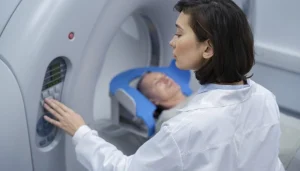
Diagnostic equipment, such as imaging devices, also becomes inoperable during power outages. In this context, the Professionals are left without resources to continue providing care.. Furthermore, it is worth highlighting that power quality is a decisive factor for accurate diagnoses. which may be compromised by the impact of distortions originating from the commercial power grid.
Even elevators stop working when the power goes out and there is no alternative electrical source. In this specific case, more precise consulting is important, as certain types of elevators with regenerative braking require a more in-depth analysis to determine the best electrical contingency solution. Access control and security systems also fail while the power is out. This compromises the transport of patients and resources, which can lead to delays, mobility problems, and other complications.
Interruption of procedures
Most medical procedures also need to be paused during periods without electricity. Lighting in critical areas, such as operating rooms and Intensive Care Units (ICUs), is essential for professionals to perform their procedures.
Power outages compromise not only operations, but also… Stabilization of the patient’s health condition.
Interruption of treatments is an extremely serious risk in hospital settings. Preventing this problem is an ethical duty of healthcare institutions in order to prevent serious sequelae and complications for patients.
Problems in the communication system
Even internal and external communication is compromised. Without electricity, electronic systems become inaccessible. As a result, medical records cannot be updated, some departments become cut off from communication, and important decisions can be delayed.
Disappearance of medical data
Power outages that prevent the recovery of medical data represent yet another setback for healthcare institutions. The loss of sensitive content, in addition to violating the law, is a serious problem. General Data Protection Law (LGPD), may compromise patient treatment, since Important information may be lost or not saved in medical records..
This also applies to payment systems and other internal control steps in hospital management.
How do hospital UPS systems ensure power stability?
Given the varying degrees of risk that power outages can cause in hospital environments, ensuring the energy reliability This should be a commitment from healthcare institutions. To achieve this, it is essential to have alternative energy sources.
Uninterruptible power supplies (UPS) are highly efficient alternative solutions for promoting… energy availability in different environments, including hospitals. With this equipment, when the power goes out, the equipment continues to be powered. without interruptions or disturbances in the power supply. And even when the electrical grid is present, they make all necessary corrections and ensure the proper quality of energy.
Thus, with hospital uninterruptible power supplies (UPS)It is possible to prevent fluctuations and failures that can compromise the operation of equipment, medical procedures, and the preservation of supplies used in the healthcare field.
The use of uninterruptible power supplies (UPS) for hospital equipment is also essential to ensure compliance in healthcare institutions. These devices have safety certifications that meet the specifications and technical standards of the field, promoting adequate energy autonomy for the environment.
There is also the possibility of remote management of UPS systems, which further enhances the uninterrupted supply of power. In addition, constant monitoring ensures compliance with preventive maintenance plans, providing… Greater reliability to the electrical system of medical facilities.
In other words, with the use of uninterruptible power supplies (UPS), it is possible to preserve the integrity and operation of hospital equipment. This makes all the difference in protecting and promoting the health and well-being of patients, favoring the safety and stability of the system. energy infrastructure.
Therefore, having reliable resources is an essential initiative to reinforce the energy reliability of these environments.
Want to take the first step?
Contact Engetron Discover the best UPS (Uninterruptible Power Supply) models to guarantee stable, reliable, and uninterrupted power for hospital equipment!