





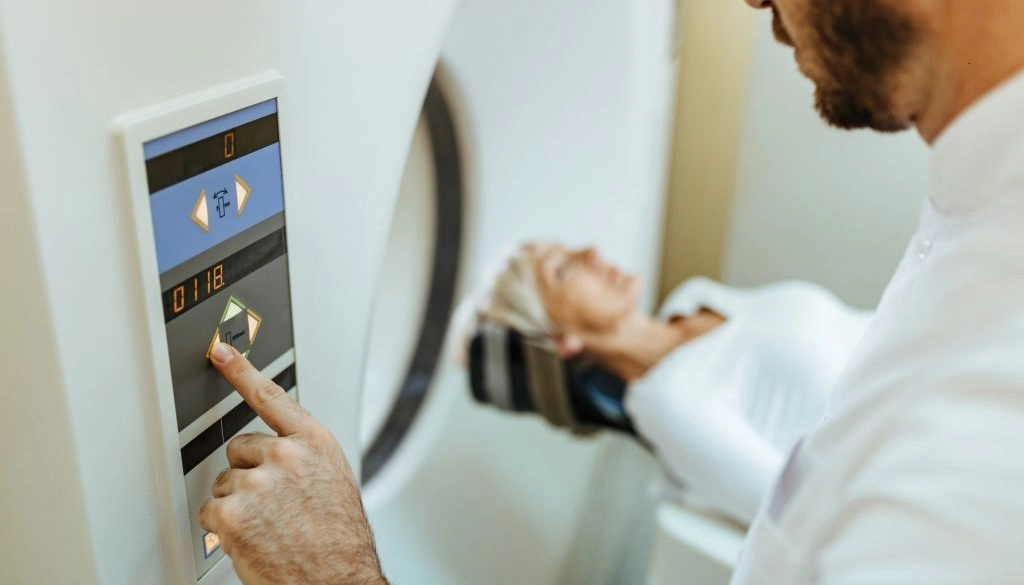
Telemedicine has brought about a significant transformation in medical practice, enabling high-definition and detailed imaging exams, which are fundamental for accurate diagnoses and effective treatment adherence. However, the reliability of these processes depends directly on… operational continuity of medical equipment, especially in scenarios of power outages or interruptions.
In this context, the uninterruptible power supply (UPS) plays a strategic role by ensuring the stability of the power supply, avoiding the need to repeat tests and guaranteeing the integrity of clinical data.
The importance of continuity and accuracy in examinations.
- Minimizing patient exposure to radiation.In radiographic examinations, a power outage may require the procedure to be repeated, increasing the radiation dose received.
- Uninterrupted workflowOperational continuity is essential for diagnoses in critical cases, reducing delays and increasing clinical efficiency.
- Strategic data managementModern systems perform automatic cloud backups, eliminating the need for physical printing and ensuring compliance. LGPD.
- Reducing errors and rework.The continuous availability of equipment reduces operational failures and improves the productivity of the medical team.
The role of uninterruptible power supplies (UPS) in medical infrastructure.
The UPS acts as technical barrier against electrical instabilitiesoffering:
- Protection against power outagesThis prevents the interruption of examinations and the need for repetition, thus preserving patient safety.
- Stabilizing electrical voltage: ensures the quality of the supplied energy, a critical factor for high-precision equipment.
- Prevention of physical harm: protects sensitive components against surges, voltage spikes and frequency variations, extending the lifespan of the devices.
- Operational safetyIt reduces the risk of serious failures, such as overheating or fires resulting from electrical instability.
Technical criteria for choosing the ideal UPS (Uninterruptible Power Supply).
When selecting an uninterruptible power supply (UPS) for medical clinics, specific technical parameters must be considered:
- Operating autonomyCalculate the total power of the equipment and add a safety margin of approximately 30%.
- Wave type: opt for pure sine waveindispensable for sensitive medical equipment that requires clean and stable power.
- Electrical compatibility: verify compliance with the standard NBR 14136an adequate number of outlets and compatibility with the clinic’s electrical network.
- Expansion capacityConsider the possibility of future integration with new equipment or systems that require higher energy.
- Preventive maintenanceImplement regular routines to ensure continuous performance and extend battery life.
Impact on patient experience and clinical management
The use of uninterruptible power supplies (UPS) not only ensures the continuity of examinations, but also:
- It increases diagnostic reliability., ensuring high-precision images.
- Improves the patient experience., conveying safety and reducing the risk of unnecessary exposure.
- It strengthens the clinic’s reputation., by demonstrating a commitment to quality, safety, and regulatory compliance.
- It increases team productivity., by avoiding interruptions and rework.
Conclusion
An uninterruptible power supply (UPS) is a strategic and indispensable investment For clinics that perform imaging exams. It ensures operational continuity, protects high-value equipment, and guarantees accurate diagnoses, in addition to preserving the integrity of patients and employees.
Adopting appropriate uninterruptible power supply (UPS) solutions represents not only a protective measure, but also a competitive advantage for clinics seeking excellence in their services.